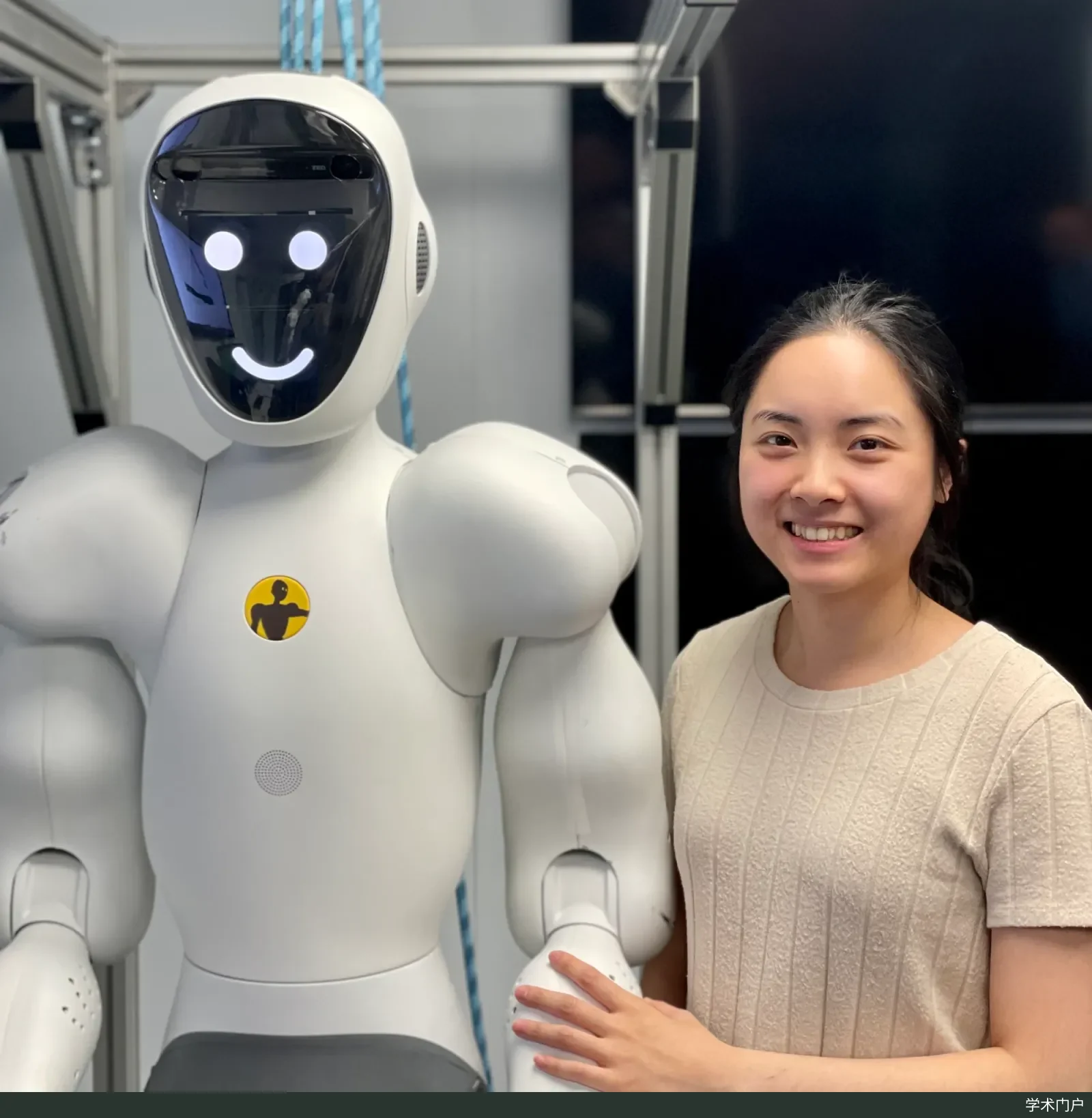
Robot learning research depends on large amounts of public data. Figure: Halodi Robotics perception engineer with a humanoid collaborative robot (illustrative; not directly tied to the datasets discussed). Photo: Nicholas-halodi; source: Wikimedia Commons; license: CC BY-SA 4.0.
On 16 October 2026, developer rs1g6r posted audit results from the open-source tool rdq on the Hugging Face Forums: among the 3,000 most-downloaded LeRobot robot datasets, 56.5% of apache-2.0 tags were likely only the upload tool’s default; of 304 copies whose sources could be traced, 200 disagreed with the original license. Related fixes have been submitted to LeRobot and are not yet merged.
Forum post and what was audited
The post appeared in the Show and Tell section of the official Hugging Face Forums, titled “I checked the licences and videos of public robot datasets: here's what I found,” with a forum date of 16 October 2026. It summarizes the author’s full report findings-2026-10.md on GitHub. The audit targets robot-learning datasets on the Hugging Face Hub in LeRobot format. LeRobot is Hugging Face’s open-source robot-learning library; its push_to_hub() function uploads datasets to the Hub and auto-generates dataset cards (the Hub README describing provenance, license, and related metadata). The author’s premise: most people download a dataset, confirm it loads, and start training, rarely checking whether they are allowed to use the data or whether the camera footage is usable. As of a 17 October check, the forum post had no other user replies; follow-up discussion was mainly on GitHub.
License findings and method limits
Per the report, when the user does not specify a license, LeRobot’s push_to_hub() sets it to apache-2.0 and writes a template card. The author scanned the 3,000 highest-download datasets tagged LeRobot as of October 2026, with these results:
- 56.5% (51.9% of downloads) still carried apache-2.0 on an unedited template card. The author judges this is mostly the upload tool’s default, not a choice by the data owner.
- 304 could be traced to one of 65 public robot datasets whose terms the author had checked at the source; of those, 200 declared a license different from the original release—often relabeling CC BY 4.0 data as apache-2.0 or MIT. The data may still be usable, but CC BY’s attribution and modification-notice requirements disappear on paper.
- Another 45 added a license to data whose original release authorized only code, never the data.
Separately, among 91 datasets in a fixed LeBoard leaderboard snapshot, only 9 matched their source license, and 4 had no dataset card.

Creative Commons 20th-anniversary mark. Most of the relabeled data in the report was originally CC BY 4.0, which requires attribution and a description of changes. Author: Creative Commons; source: Wikimedia Commons; license: CC BY 4.0.
The author stresses that a tag on a copy cannot grant rights the uploader does not hold; rdq is a due-diligence tool, not legal advice. Its methodology docs also list limits: matching by repository name alone is only a clue; rights holders may intentionally change licenses; data generated by the user in a public simulator is not bound by the original dataset’s license; and the tool covers only the 65 known source datasets in its table. The numbers were corrected once: a card that mentioned BridgeData V2 only to say it was not used had been miscounted as a copy, so results moved from 305/201 to 304/200.
Video audit and upstream fix progress
On video, rdq decoded 20 datasets frame by frame—2 official and 18 high-download community sets—about 4,600 clips, with every alert confirmed by the author looking at frames. Three issues stood: (1) a second camera froze for about 1.5 seconds at the start of six clips while the main camera still moved; (2) in one dataset the first 20 clips had the two views stored swapped—the gripper view saved as the front camera—and the top-down camera had been moved after clip 39; (3) several nearly identical ~5-second empty-scene clips with no task. The third was later clarified by the dataset owner as intentional “no bottle on the table” samples to teach the model not to grasp a bottle that is not there, so not a defect. The author notes that rdq can flag clip anomalies but cannot judge causes; three false positives during the audit were corrected and documented in the report.
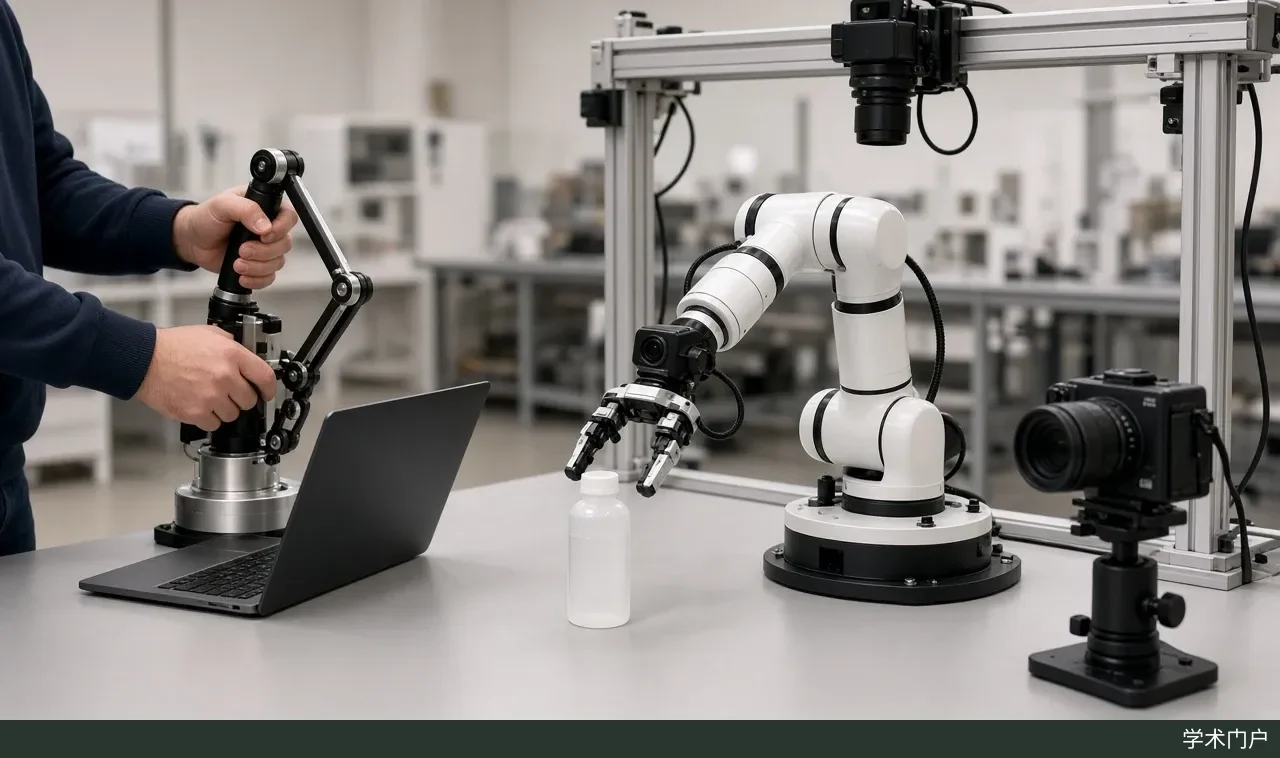
Sketch of robot teleoperation data collection: wrist, front, and overhead cameras record the workspace together, matching the multi-camera datasets discussed (not tied to any specific dataset in the report). AI-generated diagram.
License issues are already in the upstream tool’s fix pipeline. On 12 October 2026 the author opened LeRobot issue #4944, proposing to keep apache-2.0 as the practical default but warn when callers do not set a license explicitly, and to allow a source_datasets field in card metadata pointing at the original datasets. The next day, community contributor akushonkamen opened PR #4951 implementing both changes; the author and another contributor, JonnyFaeth, ran it locally and added tests. As of 15 October the PR was still open, with CI waiting for maintainer approval to run, not yet merged. The author also said that after it merges, a further change would make derivative tools such as lerobot-edit-dataset inherit the original dataset’s license automatically.
Takeaways for researchers
For researchers who train or evaluate models on public data, this discussion yields several actionable reminders (the following is this article’s synthesis of the materials above):
- Do not trust Hub card tags alone. For converted or mirrored datasets, go back to the original paper, project page, or LICENSE file—especially to separate code licenses from data licenses.
- Keep attribution for CC BY data. If the source is CC BY 4.0, even when a copy is tagged apache-2.0 or MIT, papers and derivative datasets still need attribution and a description of modifications.
- Set the license explicitly when you upload. Pass
licenseand pointsource_datasetsat the source; if PR #4951 merges, omittinglicensewill trigger a warning. - Spot-check raw video. Frozen frames, swapped views, and moved cameras do not block loading but can affect training and evaluation.
Note that all of these statistics were produced by the rdq author alone; the method is public, but there is no third-party replication yet. rdq installs via pip and also has a no-install web license checker (Hugging Face Space: rs1g6r/rdq); the author invited dataset maintainers, collectors, and purchasers to suggest further checks.
References
-
rs1g6r. I checked the licences and videos of public robot datasets: here's what I found. Hugging Face Forums, Show and Tell, 2026-10-16.
-
s1g6r. I checked the licences and videos of public robot datasets. Here's what I found. GitHub, s1g6r/rdq, docs/findings-2026-10.md, 2026-10.
-
s1g6r. How rdq checks a dataset's licence. GitHub, s1g6r/rdq, docs/licence-methodology.md.
-
s1g6r. push_to_hub defaults every dataset to apache-2.0, including conversions of CC BY datasets. GitHub, huggingface/lerobot, Issue #4944, 2026-10-12.
-
akushonkamen. fix(datasets): warn when push_to_hub defaults card license to apache-2.0; add source_datasets passthrough. GitHub, huggingface/lerobot, Pull Request #4951, 2026-10-13.
-
Information compiled and published by the Scholay academic one-stop platform; report infringement for takedown.
-
Also published on Enter Scholar, a scholars’ community for the intelligent age