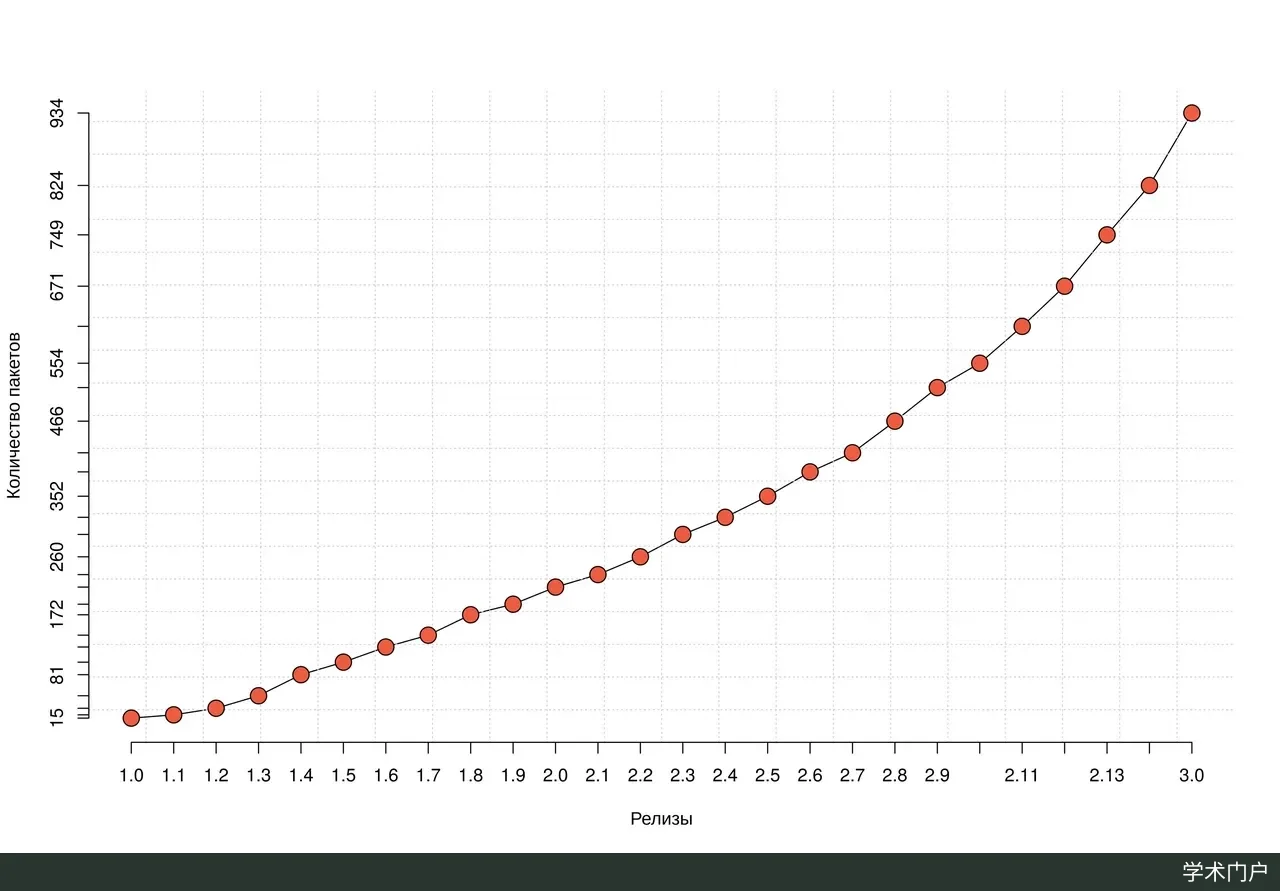
Package counts across Bioconductor releases: horizontal axis versions 1.0–3.0, vertical axis package count from 15 to 934; axis labels are in Russian; drawn February 2015 and does not reflect current scale. Author Pvltwiki, source Wikimedia Commons, license CC BY-SA 4.0.

Bioconductor Support (support.bioconductor.org) is the official user support site for the Bioconductor project. It only handles usage and error reports for that project’s R packages, and since September 2014 it has replaced the former user mailing list. Posts must carry package-name tags so maintainers are notified; official guidance also requires full code, output, and sessionInfo(), and prefers a minimal reproducible example.
How the support site relates to the Bioconductor project
Bioconductor is an open-source project started in 2001 whose mission is to develop and promote free software that supports rigorous, reproducible analysis of biological assay data; most components ship as R packages covering microarray, sequencing, flow, SNP, and other genomic analyses. The project releases two formal versions per year (the contribution guide says roughly April and October), each tied to a specific R version; there is also a devel branch where new features and packages land first.
The support site is this project’s official user support channel. Bioconductor’s help pages state that almost all questions about Bioconductor software should go here, and that this is the main way to reach the project team. Its predecessor was the bioconductor mailing list: on 16 September 2014 (CEST), Marc Carlson posted the final message announcing that the new site formally replaced the list and had imported more than 11 years of prior list discussion. The October 2014 project newsletter explained that the new site is a fork of Biostars, created because mailing-list traffic was too high and advanced search, tags, and live post editing were needed.
The support site does not cover every conversation. Package-development discussion (including current and future function design) goes to the bioc-devel mailing list; the FAQ explicitly says not to post the same question in both places. Bugs or feature requests for core-team packages can go to GitHub issues, but the help pages say not to ask usage questions on GitHub—general questions and error help still belong on the support site.
Package-name tags and what to include when asking
Every post must have at least one official tag. Autocomplete suggestions come from the current Bioconductor package list, biocViews categories, and a few special tags; FAQ special tags include Bioconductor, Install, Website, Release, Devel, CRAN, WGCNA, Submission, Workshop, Job Posting, and similar. The posting guide stresses correct package-name tags because the system emails that package’s maintainers automatically; tags are case-insensitive but must be spelled correctly. For DESeq2 usage, for example, add the DESeq2 tag.
Before posting, the guide suggests three steps: read the package vignette with browseVignettes("PackageName"); check Arguments and Value in the relevant help page (e.g. ?somefunc); then search old posts on Google with site:support.bioconductor.org plus keywords and the package name. Also confirm the question is in scope—that it really concerns Bioconductor software use.
The posting guide (revised 1 December 2023) and FAQ boil down to:
- Use the latest Bioconductor release and keep installed packages current; run
BiocManager::valid()to check package versions. - Paste all R code and all output, including errors and warnings, in fenced code blocks with three backticks on each side.
- Right after an error, run
traceback()and include its output. - End the post with a code block of
sessionInfo()output showing OS platform, R version, and package versions. - Prefer a minimal, self-contained example that others can paste into a fresh R session and reproduce.
- For experimental data, include a sample-level covariate table (one sample per row, one covariate per column); if it helps and can be public, also state the experimental aim.
Titles should be specific. The guide’s example: “time course experiment using limma” is better than only “limma.” If you are asking how to use a function or package, say which docs you already read and why they did not resolve the issue, so answers can target the gap instead of only pointing back to the docs. Post types besides the default question include job postings, tutorial shares, and news; the body uses a Markdown editor, and images are inserted via direct links from external hosts such as imgur, per the FAQ.
Maintainer duties and reply rules
The support site has clear expectations for package maintainers. Bioconductor’s contribution guide lists “long-term user support via the support site” among conditions for accepting new packages, and maintainer duties state that the support site is the official user channel: maintainers should register and use it, add every package they maintain to Watched Tags in their profile so they are notified of questions, and respond promptly to bug reports and questions. The FAQ also says maintainers must subscribe to the support site when submitting a package and should answer questions about their own packages there.
For askers, the rule is not to email maintainers directly unless they ask to switch to email; keep discussion on the site. The reason is that the support site is public and searchable, so answers become an archive for later readers. Some maintainers list a separate bug-report address on the package home page or in the DESCRIPTION BugReports field.
Replies also have roles: use Add Comment for follow-ups or extra information; use Add Answer only when truly answering the original question. The guide encourages answerers to show how they reached the answer, use simple English, and include relevant links; rudeness and personal attacks are not accepted, and the whole site follows the Bioconductor Code of Conduct. Moderators are chosen by the core team from long-trusted users; obvious spam accounts are suspended or banned, and off-topic posts unrelated to Bioconductor are usually deleted. The number beside a username is cumulative upvotes plus accepted answers.
Division of labor with Biostars, value, and limits
The support-site FAQ and posting guide state the split plainly: Bioconductor package usage and troubleshooting go here; general bioinformatics, computational genomics, biological data analysis, and non-Bioconductor software questions go to Biostars or SEQanswers; non-Bioconductor R package questions and general statistics go to R-help or Stack Overflow. In short: if the problem sits on a Bioconductor package, come here; if it is pipeline choice, upstream tools, or general bioinformatics concepts, Biostars fits better. The two sites look similar because the support site itself is a Biostars fork.
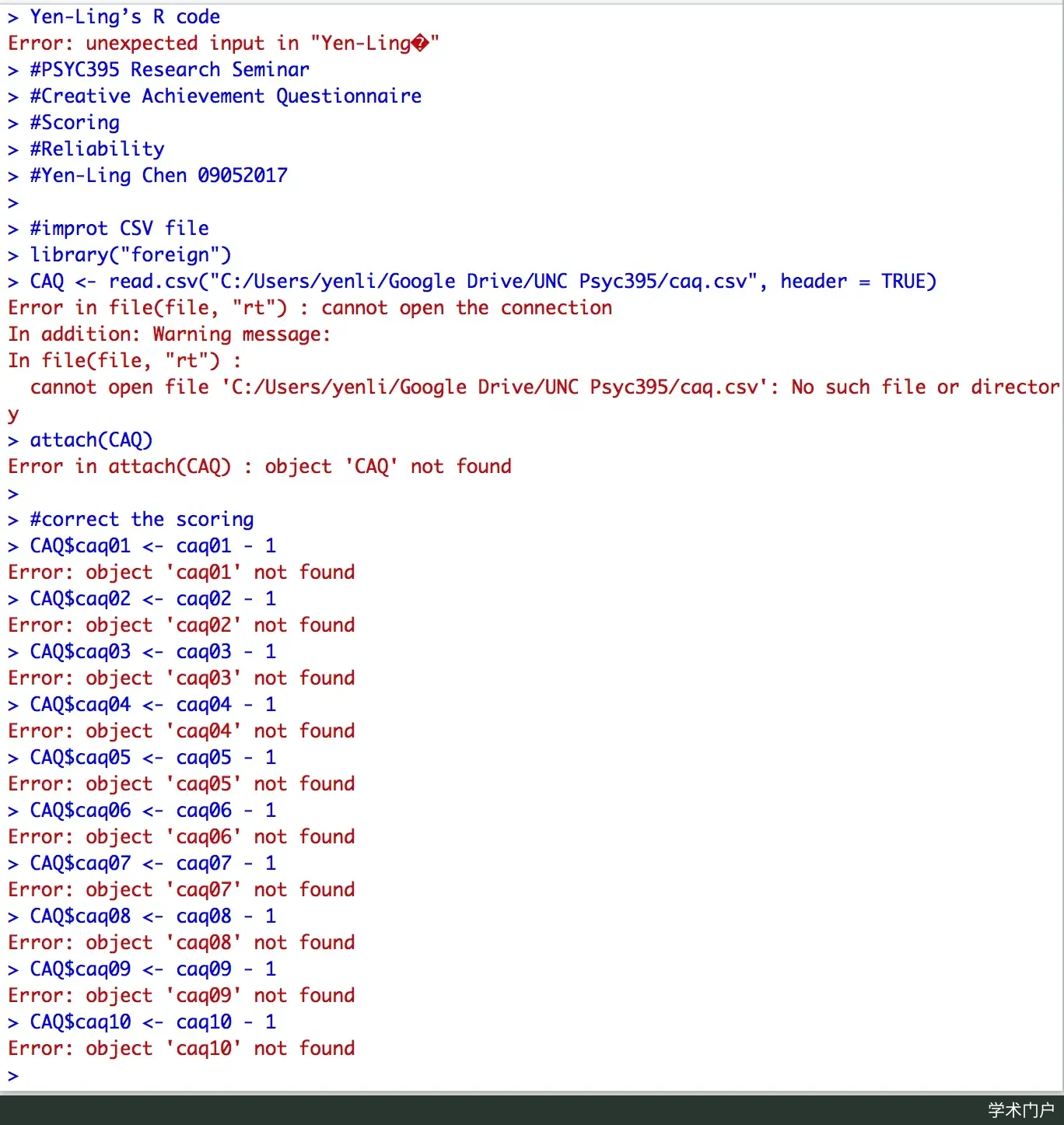
Object-not-found errors in RStudio when data were not loaded. Per the support-site FAQ and posting guide, general R problems unrelated to Bioconductor packages belong on R-help or Stack Overflow; if the error comes from a Bioconductor package, post it on the support site with sessionInfo(). Author Emmagch (2017), source Wikimedia Commons, license CC BY-SA 4.0.

For researchers, three points of value stand out. First, Q&A is aggregated by package-name tags, so known issues for a package can be browsed by tag or found with a site: search. Second, the archive is long: the 2014 migration imported more than 11 years of mailing-list discussion. Third, maintainers are expected to watch their packages’ tags, so package authors themselves often answer; when the home page was visited on 21 October 2026, recent questions under DESeq2, limma, edgeR, and similar tags often had replies from high-reputation users. The project About page’s statistics updated 18 December 2023 listed 18,999 active support-site members in the previous year.
Limits are equally clear. The site only covers Bioconductor packages; off-topic posts are usually deleted. Answers rely on volunteers and maintainers; official wording uses “expect” and “should,” and related pages give no reply-time SLA. Bioconductor releases twice a year, so old threads often match old versions—check post date and the thread’s sessionInfo() before relying on them. The home page can also show ads unrelated to bioinformatics, showing that spam cleanup lags. The membership figure above ends at late 2023 and does not represent current scale.
References
-
Bioconductor. Frequently Asked Questions — Bioconductor Forum. Accessed 2026-10-21.
-
Bioconductor. Bioconductor - Posting Guide. Revised 2023-12-01, accessed 2026-10-21.
-
Bioconductor. Bioconductor - Support Site. Accessed 2026-10-21.
-
Rue-Albrecht K, Cassol D, Rainer J, Shepherd L, Ramos Pérez M, Morgan M. Bioconductor Package Submissions. In: Bioconductor Packages: Development, Maintenance, and Peer Review. Built 2026-08-19, accessed 2026-10-21.
-
Bioconductor. Bioconductor - About. Statistics updated 2023-12-18, accessed 2026-10-21.
-
Carlson M. Important announcement about our new support site. bioconductor mailing list, 2014-09-16.
-
Obenchain V. Bioconductor - Newsletter, October 2014. October 2014.
-
Bioconductor. Bioconductor Forum home. Accessed 2026-10-21.
-
Information compiled and published by the Scholay academic one-stop platform; report infringement for takedown.
-
Also published on Enter Scholar, a scholars’ community for the intelligent age