Project overview

MISAKA Agent is an open-source multi-agent research system for the humanities and social sciences (GitHub repository Luciole-Studio/Misaka-Agent, Apache-2.0 license). It manages research branches with a directed acyclic graph; a coordinator, specialist agents, and a red team divide the work and produce a citation-traceable report. v0.18.11 was released on 8 October 2026, mainly fixing interrupt recovery and citation locating. This article is source verification; we did not install or test hands-on.
Project positioning and how it works
- What it is: The README describes MISAKA as an “AI agent architecture built for the humanities and social sciences,” combining a directed acyclic graph (DAG) with “symptomatic reading” to surface multiple narratives. Users talk with the coordinator Last Order, which breaks down the question, drafts a research plan, and assigns research branches to specialist agents called Sisters; after Sisters submit reports, Last Order writes the conclusion, and the final report is written into the project folder as a research paper.[1]
- Seven stages per node: Each research node goes through planning, task cards, conclusion, red-team review, response review, disagreement review, and decision. Every finding on a task card must state claim type (fact, inference, interpretation, or value judgment), the file and page relied on, and a citation; the red team checks facts and also surfaces premises the conclusion depends on but does not state.[1]
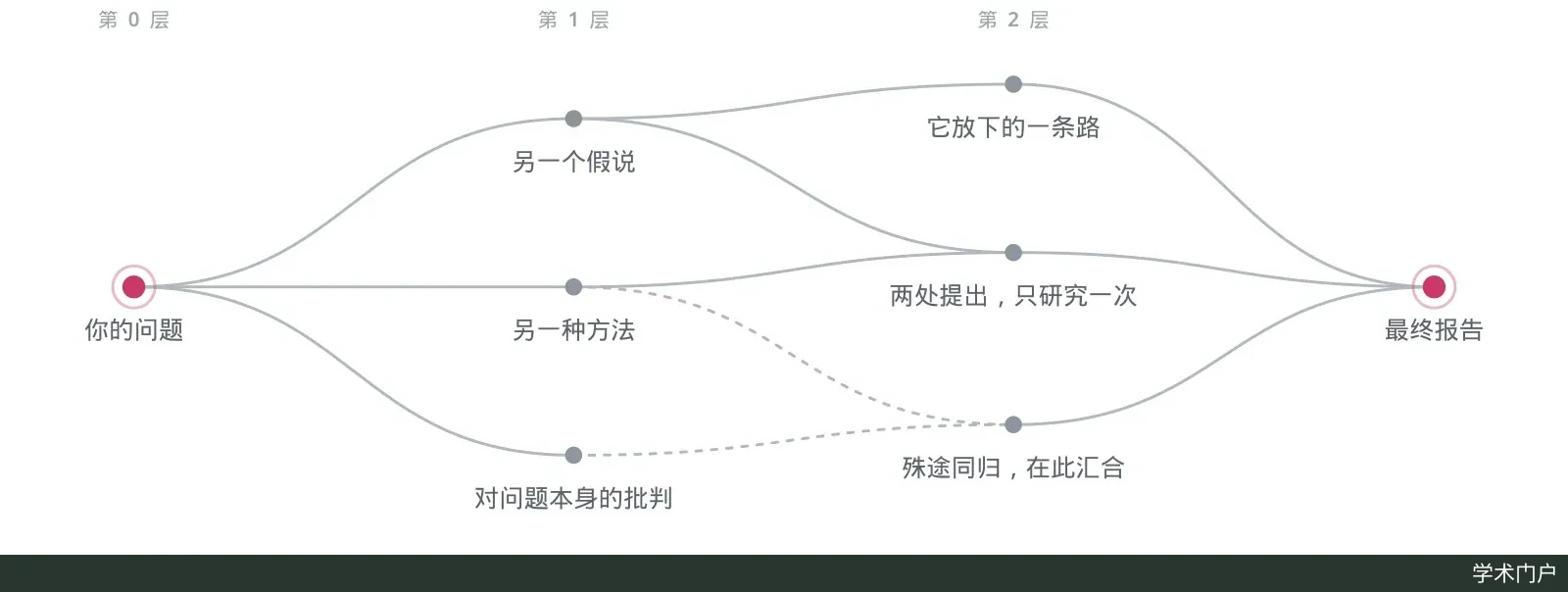
- How the research graph grows: Alternative paths built on different premises fork from the original node into new nodes, each with its own team and red team. Research advances by layers; the same question is researched only once; different routes are compared at junctions—what can be integrated is integrated, and irreconcilable disagreements are written out explicitly. Default parameters are depth 3, 4 nodes running at once, 4 task cards per node, 2 follow-up rounds, 2 revisions, and a 30-node cap.[1]
- Designed for HSS materials: PageIndex builds a hierarchical table of contents for documents over 20 pages and reads by section or page on demand; LCM does hierarchical compression of long conversations that can still point back to the original text; citations can locate page numbers and character offsets; Chinese, English, and Japanese OCR are supported, plus DjVu and older Office formats. Plans, task cards, each version of conclusions, critiques, and source lists are all saved as Markdown in the project.[1]
- Runtime requirements and license: Supports macOS, Linux, and Windows (x86_64 or arm64); official recommendation is macOS. Needs uv, git, ripgrep, fd, poppler, and an API key for a model service or a ChatGPT or GitHub Copilot subscription. Install with
uv tool installfrom the GitHub repo, or download prebuilt packages per platform. The repository is Luciole-Studio/Misaka-Agent at https://github.com/Luciole-Studio/Misaka-Agent[1]; the LICENSE file is Apache License 2.0; third-party components keep their own licenses.[1,2]
What’s new in v0.18.11
v0.18.11 was published on GitHub Releases on 8 October 2026 (UTC); v0.18.10 shipped earlier the same day. Release notes say the fixes came from two places: fully running research tasks on real models (one run with 3 nodes and 22 task cards, stopped mid-way then resumed) and rechecking 0.18.10 fixes. Main changes:[3,4]
- Research boards no longer record every streaming token: A previous run wrote 46,000 lines (22 MB), and every budget check had to reread it all; boards that already hold such records also no longer slow down because of them.
- Research-run recovery and planning: After all cards fail, follow-up rounds no longer repeat forever; rounds where every card was cancelled are rolled back and the node concludes from existing results; cancelled cards are not put back into the plan on replan; nodes that never wrote a conversation start a new one instead of failing every resume;
/research stopon an already-finished run gives a direct message. - Task cards and review: Cards sent back for redo no longer submit with the previous attempt’s summary—which previously bypassed the reviewer’s change requests; red-team retries no longer inherit the previous critique.
- Token budget:
research.token_capnow settles the request before the reply returns to the caller. Previously, if a card exited after the last reply, the request receipt could be lost and the request would be held for 15 minutes at worst-case full accounting. - Faster citation locating: Each document version is searched only once. The release notes’ example: looking up 200 missing citations in an 800-page book dropped from 30 seconds to under 1 second—developer-reported figures, not reproduced here. Search also no longer blocks nodes.
- Other fixes: On Windows,
SOURCES.mdalso lists pages consulted but not cited; on macOS, protection for frozen research files covers both Unicode spellings of filenames. - Version status: When checked on 21 October 2026, the latest release on the Releases page was still v0.18.11.[4]
Why they help
For humanities and social-science researchers, MISAKA’s distinctive trait is building disagreement and evidence tracing into the process: it does not rush to a single answer, but keeps interpretive paths under different premises and requires every finding to state type, page, and citation. The following is based on the README, official security notes, and release notes—source verification, not a hands-on install.
Suitable use cases
- Questions with multiple interpretive paths: For example studying causes of a social phenomenon—the planning coverage table maps sub-questions, actors, and dimensions onto task cards, and empty cells are explicitly declared gaps; disagreement review splits explanations under different premises into new nodes rather than merging them into the most common answer.[1]
- Large volumes of long, multilingual materials: After indexing books, archival scans, and similar with
misaka doc scan, agents read the table of contents first, then by section or page;doc_verifyreturns page, character offset, and a checksum for a citation so you can check the original.[1] - Keep an auditable research process: Plans, each conclusion version, red-team critiques, and source lists stay in the project folder. The project itself is a git repo, so you can see how arguments changed under critique; the final report’s appendix records research routes, rejected paths, and errata.[1]
- Researcher in the loop: Plans can wait for user approval, and plans that change the research question itself must get consent; runs can stop and resume anytime, with each branch on its own panel tab. 0.18.11 fixes concentrate on stop, resume, and replan.[1,3]
- Mix different models: Each specialist agent can use its own model (Claude, GPT, Gemini, or local); Claude Code and Codex can also serve as members that take tasks.[1]
Limits and cautions
- Not hands-on tested: This article is source verification without install testing; content comes from the README, LICENSE, official security notes, GitHub Releases, and repository metadata; performance numbers in the text are developer-reported.
- Very new project, frequent updates: The repository was created on 28 August 2026 and is still 0.x; v0.18.10 and v0.18.11 shipped the same day, mostly fixing issues exposed in real runs. On 21 October 2026 GitHub showed 233 stars and 10 forks. Read the matching release notes before upgrading.[4,5]
- Many model calls—control cost: By default up to 4 branches run at once, each with up to 4 specialist agents in parallel; deep research produces many model calls. The README suggests lowering research depth and setting a hard token cap per run with
research.token_capin~/.misaka/settings.json;misaka usage --runshows cost for one run.[1] - Security boundaries are yours to manage: Official security notes treat model behavior as untrusted. Agents read, write, and run files with the current account’s permissions and do not ask on every tool call; web pages, documents, and card results can bring prompt injection—viewing the panel and approving plans “are not a security boundary.” For materials that are not yours, official guidance is a dedicated account, container, or VM.[6]
- Where data goes: Data stays local; prompts go only to model services you configure. When no search service is configured or it fails, web search falls back to free public services from Exa, Parallel, Firecrawl, and Keenable (disable with
misaka web set keyless_fallback false); literature scanning sends query terms to OpenAlex. Confirm these settings before handling sensitive materials.[1] - Install details: Install from the GitHub repository; the README notes that the PyPI package named
misakais an unrelated project. Prefer running in a working folder underDocuments, not at the filesystem root.[1] - Conclusions still need human checking: Citation locating and red-team review reduce fabricated-source risk, but the final report is still model output—check against original literature before citing.
References
-
Luciole-Studio/Misaka-Agent. README (GitHub repository). https://github.com/Luciole-Studio/Misaka-Agent (accessed 2026-10-21)
-
Luciole-Studio/Misaka-Agent. LICENSE (GitHub repository license file). https://github.com/Luciole-Studio/Misaka-Agent/blob/main/LICENSE (accessed 2026-10-21)
-
Luciole-Studio/Misaka-Agent. v0.18.11 (GitHub Releases, 2026-10-08). https://github.com/Luciole-Studio/Misaka-Agent/releases/tag/v0.18.11 (accessed 2026-10-21)
-
Luciole-Studio/Misaka-Agent. Releases (GitHub release list). https://github.com/Luciole-Studio/Misaka-Agent/releases (accessed 2026-10-21)
-
Luciole-Studio/Misaka-Agent. Repository metadata (GitHub API). https://api.github.com/repos/Luciole-Studio/Misaka-Agent (accessed 2026-10-21)
-
Luciole-Studio/Misaka-Agent. Running MISAKA safely (official security notes). https://github.com/Luciole-Studio/Misaka-Agent/blob/main/docs/guide/security.md (accessed 2026-10-21)
-
Information compiled and published by the Scholay academic one-stop platform; report infringement for takedown.
-
Also published on Enter Scholar, a scholars’ community for the intelligent age