Project overview
On 29 October 2026, the OpenRefine forum published the feature-prioritization vote results: 80 users ranked needs such as joining across tables and append import through pairwise comparison. The results post links community preferences to project goals and engineering issues, giving scholars who care about research data cleaning a trackable map of demand.
Project coordinator Martin Magdinier explained in the forum announcement that the vote ran alongside the seventh user survey, from 27 July through 1 October. Of 178 survey respondents, 80 took part in feature ranking and cast 4,714 votes; the 57 options included 48 items preset by the project and 9 proposed by participants.

Each comparison showed two features; participants chose the one they needed more. The score is the share of comparisons that feature won among those it entered: 50 means even. The original post treats scores above 63 as strong preference, 36–63 as more divided demand, and below 36 as more niche or less urgent.
Easier joining of records across two datasets led at 77; append import into an existing project scored 72; click-to-rename columns and saving facets each scored 71. Participant-added “memory efficiency for large projects” scored 69, but it was added late and saw only 24 comparisons; more readable non-technical user docs and recommended tutorials scored 68. The original post flagged five suggestions with fewer than 63 comparisons, reminding readers of limited exposure.
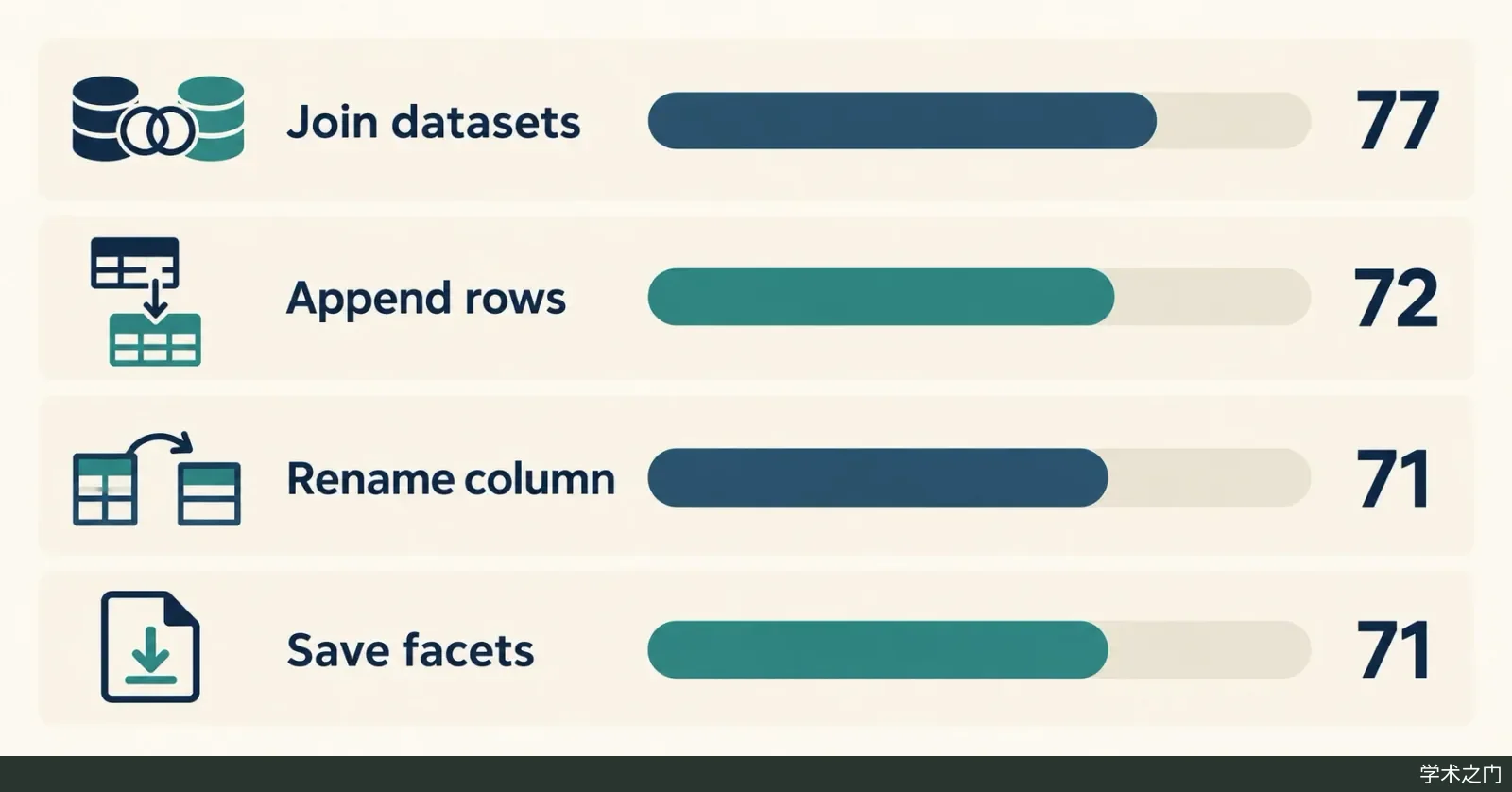
The ranking table also links the project’s goal posts and concrete engineering issues—for example cross-table join #7761, append import #715, column rename #6282, and save facets #560. Those links let readers move from preference to a specific problem and its progress. A high score does not mean the work is scheduled: column rename, for instance, already has a PR that still needs polishing, and the project still seeks UX design and front-end help.
Practical value
For teams handling collection migration, digital humanities, and research data, the results table is a way into everyday bottlenecks: cross-table joins, continually appending data, and saving filter state are all problems long-running cleaning projects may hit again and again. Researchers can locate a need in the forum results post first, then follow goal-post entries and GitHub issues for discussion and contribution opportunities.
The official survey shows respondents can identify with more than one community at once: 44% with libraries, 33% with research and academia, 21% with digital humanities. The forum itself is worth watching actively: 38% of respondents had not known it existed. The survey mainly reflects more experienced respondents and should not be read as every user’s view.
Another forum announcement places the ranking in a larger project conversation: the community call agenda for 29 October, 15:00–16:00 UTC, covered the user survey, how feature priorities shape project goals, and funding and sustainability. For research teams, reading forum results, engineering issues, and project resources together makes it easier to judge how a shared pain point becomes implementable work.

References
-
Results from the Feature Prioritization Survey 2026, OpenRefine Forum, 2026-10-29.
-
OpenRefine 2026 User Survey Results, Martin Magdinier, 2026-10-26.
-
Community Call: 2026 Survey Results and OpenRefine Project Update, OpenRefine Forum, 2026-10-15.
-
Academic Gateway · A life guide for scholars in the intelligent age
-
Information compiled and published by the Scholay academic one-stop platform; report infringement for takedown.
-
Also published on Enter Scholar, a scholars’ community for the intelligent age