Open science is easy to reduce to a few large words: open data, open code, open results. Inside a real project the questions are more specific. Which repository should hold the data? Which license should the code use? What should not be made public? How is a data management plan written? Open Science 101, offered by NASA's Science Mission Directorate, is a free course that connects those questions. [1]
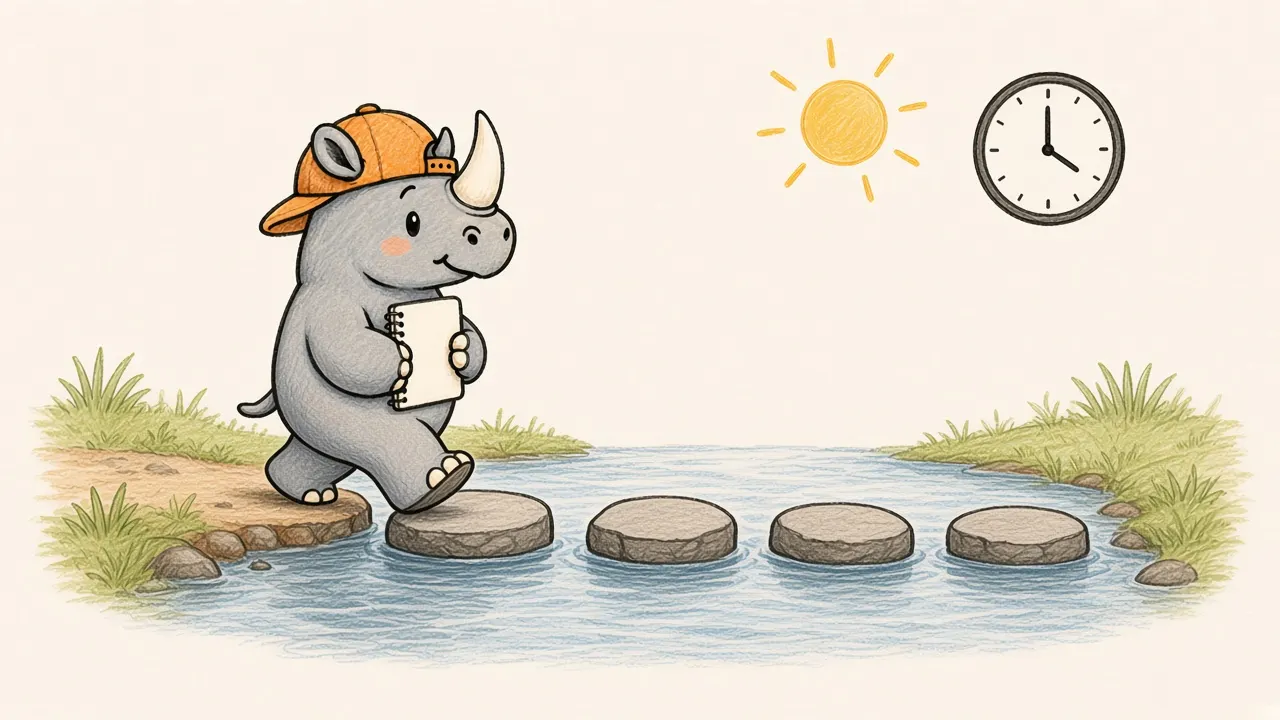
Figure: original Scholay drawing, made with AI assistance. Five modules form one path. The clock has no numbers and does not mark a specific class hour.
The course
NASA describes it as a free course in five modules. It gives researchers, students, and the public a foundation in open science: the principles, how to plan, carry out, and take part in an open-science project, the legal and ethical questions that come up while planning, and current good practice. Each module takes about 2.5 hours. The whole course takes about 12 hours. [1]
The course is self-paced. After enrolling, a learner can move at their own speed, and progress is saved between sessions. [1] Finishing it earns a NASA open-science digital badge and a certificate. [1] Credly issues the badge. It is marked free and foundational, and the requirement is completion of Open Science 101. [2]
What the five modules cover
NASA's page lists the modules as follows. [1]
| Module | Contents |
|---|---|
| Module 1 | What open science is, current practice, and the benefits and difficulties |
| Module 2 | A basic framework, including the use-make-share framework, the FAIR principles, and basic tools |
| Module 3 | How to find, assess, make, and share open data |
| Module 4 | How to practice open code across the life of a codebase, using the use-make-share framework |
| Module 5 | How to start a research collaboration, write ethical contributor guidelines, find, assess, and publish open results with proper credit, and put this into an open-science and data-management plan |
The last three modules split the work into data, code, and results. Each one follows the same line: use what others have made, make your own, and share it. The skill labels on Credly match those pieces: the ethos of open science, open tools and resources, open data, open code, and open results. [2]
How to enroll
Researchers and students outside NASA create an account on NASA's learning platform and then enroll. [1] The enrollment link on the NASA page goes to the course page on NASA STEM Gateway. [3] NASA employees enroll through the agency's own learning system, SATERN. [1]
When twelve hours is too much: the two-hour Essentials course
NASA also offers the shorter Open Science Essentials, about two hours. It is a quick overview of the core ideas, including open data, open peer review, and collaborative research practice, and it can be taken on its own. [1] Its five lessons introduce what open science is and why it helps; common obstacles, such as institutional resistance, fear of being scooped, and data ethics; the workflow, the FAIR principles, and an open-science and data-management plan; open data, open-source software, and open results; and practical tools such as persistent identifiers, open licenses, repositories, version control, and preregistration. [1] Finishing it also earns a badge and a certificate. [1]

Figure: original Scholay drawing, made with AI assistance. When time is short, take the shorter path and return to the full course later.
How to schedule the study
At 2.5 hours a module, one module a week finishes the course in five weeks. [1] A lighter way is to check the course against a project already in hand. During module 3, test a dataset you are using against the FAIR principles. During module 4, choose a license for your analysis code. By module 5, draft a data management plan. At the end of the course, that draft is something you can actually use.
References
- NASA Science. Open Science Trainings. Accessed 13 November 2026.
- Credly. NASA Open Science 101. Accessed 13 November 2026.
- NASA STEM Gateway. Open Science 101. Accessed 13 November 2026.