PubPeer is a post-publication peer-review platform run by a nonprofit foundation: any paper with a DOI, PubMed, or arXiv ID can be discussed in public there. Image duplication, data anomalies, and similar issues are often first flagged on the site, and authors are notified and can reply. Drawing on the official FAQ, this article explains who uses it, how to post, the rules and moderation, and—using two 2026 public discussions—how scholars can use it and which limits to watch for.
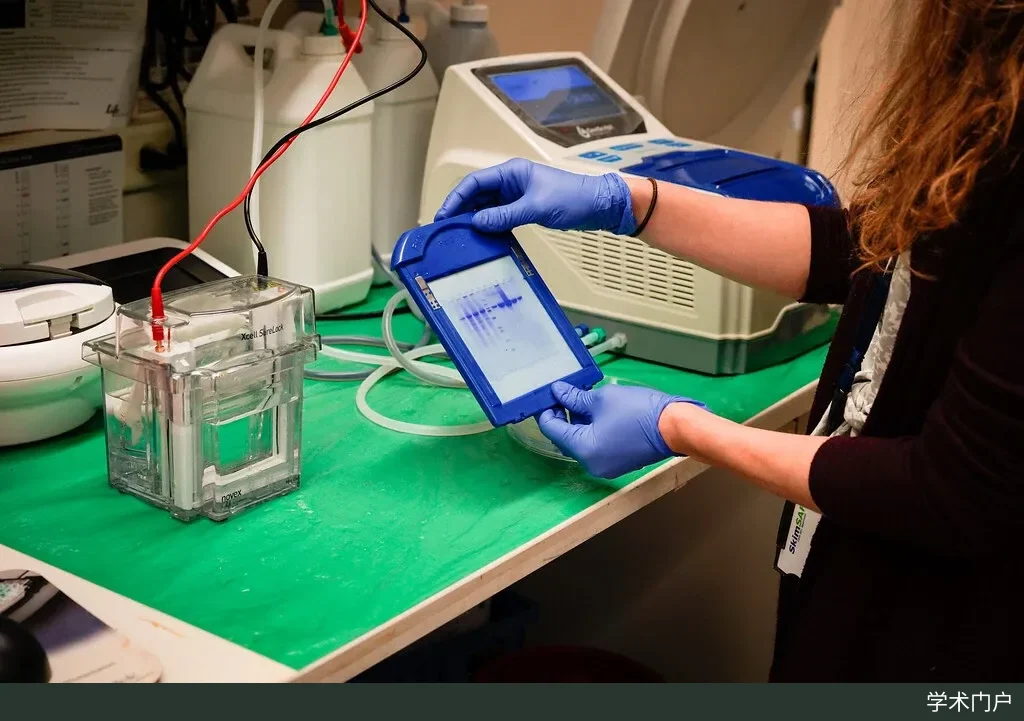
A researcher examines western blot results; band images of this kind are common subjects of image discussion on PubPeer. Figure: U.S. National Institutes of Health (NIH); source: Flickr; license: Public Domain Mark 1.0.
What PubPeer is and who uses it
Per the official About page, the PubPeer Foundation is a public-benefit corporation registered in California with 501(c)(3) nonprofit status; its bylaws state that pubpeer.com serves readers and commenters, that all site content is created by them, and that the foundation’s current focus is maintaining a post-publication peer review platform. The official FAQ states that any publication in any field may be discussed, provided it has an identifier the platform can recognize—such as a DOI, PubMed ID, or arXiv ID. Paper metadata mainly comes from public databases such as Crossref, so when a DOI search fails to find a paper, the usual cause is an indexing problem at the journal or Crossref, not that the paper is “not allowed to be discussed.”
The FAQ describes readers on the site as “mostly researchers and scientists.” From public reporting and journal notices, participants fall roughly into three groups: research-integrity “detectives” who specialize in checking images and data—for example Sholto David, thanked in a Frontiers in Oncology retraction notice dated 28 May 2026; authors of papers under discussion, who receive automatic email alerts and can reply with a named account; and journal editorial offices—the same retraction notice states that the authors contacted the editors after PubPeer comments flagged image duplication, and the investigation ended in retraction. Many others are only readers: the site offers Firefox, Chrome, and Safari browser extensions that mark papers with PubPeer discussion on PubMed results and journal pages. The FAQ also mentions a Zotero plugin, but the extension page currently says the reference-manager plugin is “under development”; the two statements disagree, so check the extension page before installing.
Accounts, posting, and moderation
Accounts are either named or anonymous, a design carried over from the PubPeer 2.0 redesign in 2017. Anonymous account pseudonyms are randomly assigned by the system from the tree of life (for example Drosophila melanogaster) and cannot be chosen; login uses a system-issued access code that cannot be recovered if lost—you must open a new account. Newly created pseudonym accounts all start on a “greylist”: comments are moderated before they appear, which the site says may take up to a week; accounts whose comment quality earns moderator trust can move to a “whitelist,” where comments go live immediately. Author replies must use a named account verified with a trusted institutional email, checked manually by moderators, which can take some time. People without a suitable publication record can write to contact@pubpeer.com to request a manual account. Users who need the strongest anonymity protection are advised to access the site via the Tor browser.
To post, first find the paper page by DOI, PubMed, or arXiv ID, then write the comment. Comments use Markdown; rendering differs from the edit box, and the site stresses using the preview window. After submission and before moderation finishes, you can edit while logged into the original account as long as no newer comment has appeared in the same thread; whitelist users can keep editing after a comment is public until the next comment appears. To report a non-compliant comment, use the report button beside each comment.
If your own paper is commented on, the site gives authors a “permanent right of reply,” encourages responding on the platform, and urges sharing original data where possible: small images and tables can be pasted into comments; larger datasets should go to Dryad, Zenodo, or figshare with links. Note that even when an author’s reply looks persuasive, the platform generally will not delete the original comment; after a journal publishes a correction, the discussion thread is likewise not edited or removed for that reason.
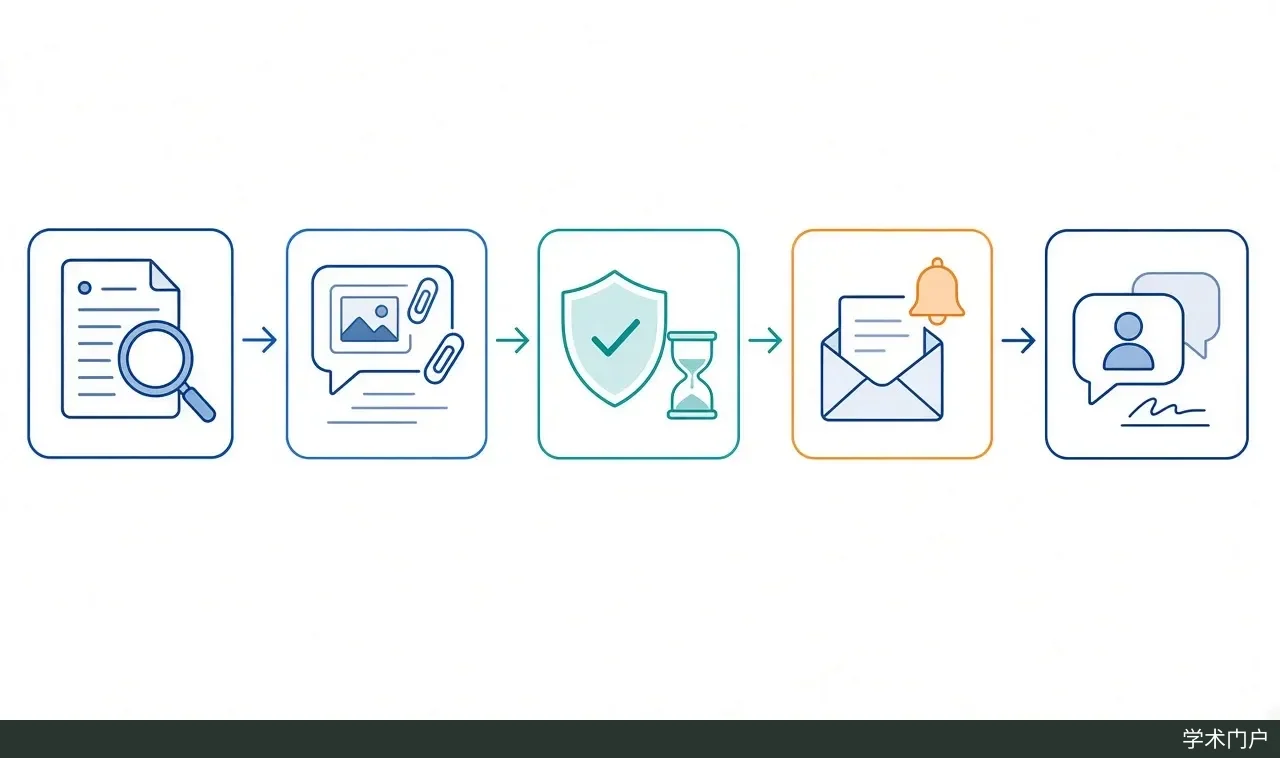
PubPeer posting and moderation flow (left to right): find the paper by DOI, PubMed, or arXiv ID; write a comment with screenshots and sources; moderation (anonymous and greylist accounts are pre-moderated, up to about a week; whitelist posts go live immediately); comment is public and the author is emailed; the author replies with a named account. Based on the PubPeer official FAQ; not a site UI screenshot. AI-generated diagram.
Comment rules and etiquette
The FAQ states the most important rule plainly: statements must rest only on “publicly verifiable information,” usually data in the paper under discussion, or other papers, books, news, or websites, with at least a source cited. Hearsay is not accepted; the official example is that you must not write “a friend who worked in that lab said their glassware was dirty.” The site therefore acknowledges that PubPeer is a poor fit for whistleblowers relying only on personal knowledge. Direct accusations of misconduct are forbidden, as are comments about the authors personally or speculation about their motives. The site gives two reasons: readers can draw their own conclusions from clearly presented facts; and the platform bears defamation risk for comments—if sued, it may need to prove the comments true.
Tone should be polite, neutral, and on the substance. The FAQ specifically advises against loaded adjectives such as “critical,” “blatant,” and “devastating,” and asks commenters not to sermonize about “rigor” or “research integrity”; write more like a careful paper than a social-media rant. Moderation also weighs comment quality. Several requirements are especially useful for newcomers:
- Embed screenshots of the figures, tables, or equations under discussion with captions, using and citing original elements from the paper—not only your own reconstructed versions; explanations must be written text, not screenshots of text.
- Argue for conclusions rather than merely asserting them; when you suspect image anomalies, attach annotated images at high enough resolution to zoom.
- Comments that only note JPEG compression artifacts are rejected; automated image analyses such as ELA (error level analysis) are treated as “almost never correctly interpreted” and usually not accepted.
- When you suspect image duplication, first rule out normal experimental explanations—for example reprobing the same blot, or multiple panels sharing the same loading controls.
- This is not a “homework help desk”: you may ask for clarification, but show you have read the relevant parts of the paper; anonymous comments that only echo others’ views are not accepted.
Value as a reference, recent cases, and limits
For scholars, PubPeer’s main value is a layer of “after-sales information” on published papers. Before citing or reproducing a paper, check whether it has PubPeer discussion and how the authors replied; with the browser extension, prompts appear while you browse journal pages. The FAQ also says an API is “coming soon”; for now you must contact the platform for a key. One ongoing example is a bone-metastasis study published in Science Translational Medicine on 21 May 2025 (DOI: 10.1126/scitranslmed.ado7225). Per Retraction Watch on 14 October 2026, the paper’s PubPeer thread, starting in April 2026, pointed to suspected duplication across sets of mouse images. Corresponding author Li Ma replied on the site that the problem was in figure assembly; the authors had checked the original data and contacted the journal. The journal issued an erratum on 24 June 2026 saying the conclusions were unaffected. In August and September, further users noted identical numerical values and “statistically anomalous” coincidences between some figures; the authors replied that some issues came from copy-paste errors in the source Excel file and disagreed with the probability methods in the comments. On 14 October the journal issued an editorial expression of concern, saying the accumulated issues had reduced editorial confidence and that it was working with the authors on whether an erratum could resolve them. The case shows the full path of “comment, author reply, correction, further comment, journal statement,” still without a final outcome as of the report. The thread is reachable via PubPeer DOI search[11]; PubPeer uses bot verification, so this article could not open the raw thread—details above follow Retraction Watch and the journal notices.
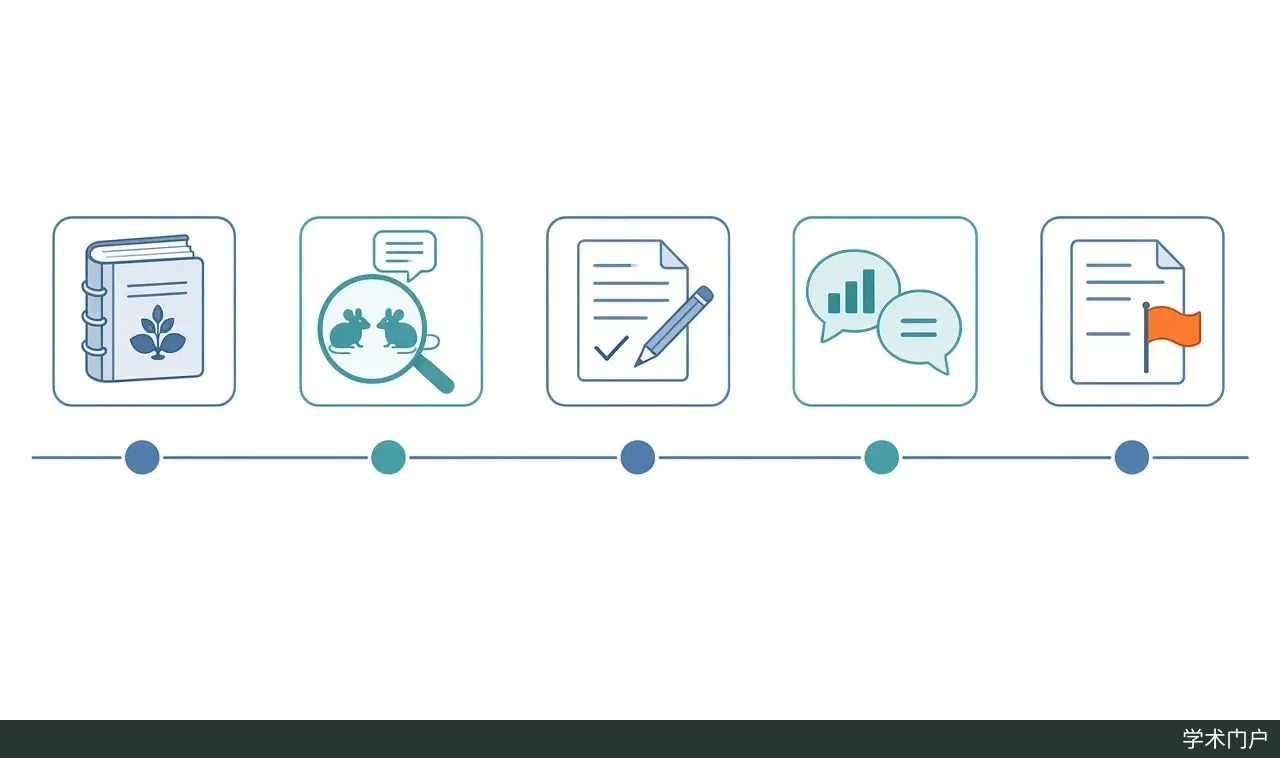
Case timeline (left to right): paper published 21 May 2025; April 2026 PubPeer comments flag suspected mouse-image duplication and the author replies on site; 24 June 2026 journal erratum; August–September 2026 new comments on identical values and statistical anomalies; 14 October 2026 journal editorial expression of concern. Based on Retraction Watch and the Science Translational Medicine erratum and expression of concern. AI-generated diagram.
Also keep the limits clear. First, the platform does not scientifically review comments and does not guarantee they are true; it explicitly warns that comments should not be equated with misconduct allegations, and comment counts should be read carefully—many only flag imperfect practice, such as blot splicing or missing loading controls, without showing the results are wrong. Second, moderation can miss things. Retraction Watch reported on 23 January 2026 that image-integrity expert Mike Rossner found that several comments by the pseudonym Ecionemia acervus had “duplicated lanes” that were forged by copying one lane onto an adjacent lane; the three fabricated comments all targeted papers by KAIST professor Byung-Hyun Park. A PubPeer spokesperson said the images were “carefully designed to mislead moderators,” with small originals and low resolution so moderators did not notice at the time; the platform disabled those comments and called such malicious comments “very rare.” Because the original comments were removed, the episode is knowable only through reporting. The safest reading is to treat comments as leads you must verify against the original paper yourself. Third, anonymity creates asymmetry: neither readers nor authors can judge a commenter’s motives or conflicts of interest—only the content; and anonymous or greylist comments may wait up to a week for moderation.
References
-
PubPeer Foundation. Frequently asked questions. Page undated; accessed 2026-10-17. https://pubpeer.com/static/faq
-
PubPeer Foundation. The PubPeer Foundation (About page). Page undated; accessed 2026-10-17. https://pubpeer.com/static/about
-
PubPeer Foundation. Browser extensions. Page undated; accessed 2026-10-17. https://pubpeer.com/static/extensions
-
Retraction Watch. Meet PubPeer 2.0: New version of post-publication peer review site launches today. 2017-06-15. https://retractionwatch.com/2017/06/15/meet-pubpeer-2-0-new-version-post-publication-peer-review-site-launches-today/
-
Frontiers Editorial Office. Retraction: PTIP inhibits cell invasion in esophageal squamous cell carcinoma via modulation of EphA2 expression. Frontiers in Oncology, 2026-05-28. https://doi.org/10.3389/fonc.2026.1881179
-
Teng H, et al. In vivo CRISPR activation screen identifies acyl-CoA–binding protein as a driver of bone metastasis. Science Translational Medicine, 2025-05-21. https://doi.org/10.1126/scitranslmed.ado7225
-
Science Translational Medicine. Erratum for the Research Article “In vivo CRISPR activation screen identifies acyl-CoA–binding protein as a driver of bone metastasis”. 2026-06-24. https://doi.org/10.1126/scitranslmed.aej3867
-
Science Translational Medicine. Editorial Expression of Concern for the Research Article “In vivo CRISPR activation screen identifies acyl-CoA–binding protein as a driver of bone metastasis”. 2026. https://doi.org/10.1126/scitranslmed.aem8786
-
Gallegos A. Paper touted by MD Anderson gets expression of concern for data ‘concerns’. Retraction Watch, 2026-10-14. https://retractionwatch.com/2026/10/14/science-translational-medicine-md-anderson-expression-of-concern-data-concerns-china/
-
Joelving F. Fabricated allegations of image manipulation baffle expert. Retraction Watch, 2026-01-23. https://retractionwatch.com/2026/01/23/fabricated-allegations-of-image-manipulation-baffle-expert/
-
PubPeer. Search by DOI 10.1126/scitranslmed.ado7225 (thread entry; could not open for direct verification). https://pubpeer.com/search?q=10.1126/scitranslmed.ado7225
-
Information compiled and published by the Scholay academic one-stop platform; report infringement for takedown.
-
Also published on Enter Scholar, a scholars’ community for the intelligent age