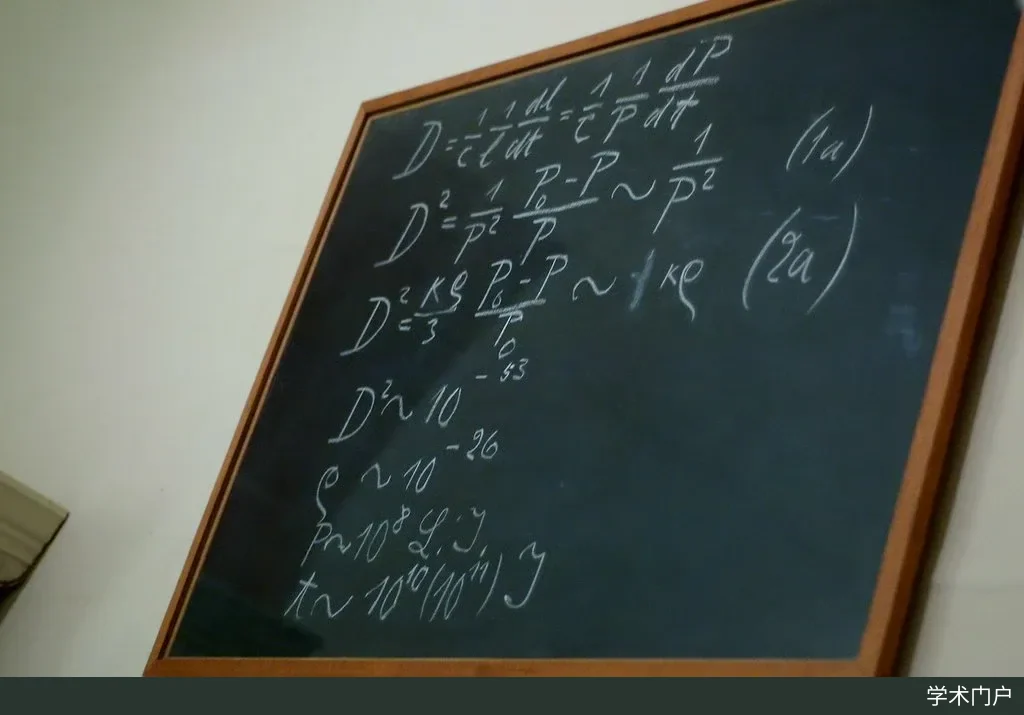
Einstein’s blackboard preserved at Oxford. Photo: Patrick Quinn-Graham (Flickr user thepatrick); source: Flickr; license: CC BY 2.0.
MathOverflow is a research-level mathematics Q&A site founded in 2009 by a group of Berkeley graduate students and hosted on the Stack Exchange network; its main users are professional mathematicians and math graduate students. It only accepts questions tied to current research that have clear answers—not homework help, and not a discussion forum. Drawing on official help pages, this article outlines how to ask, reputation privileges, etiquette, and AI content policy, and uses a few autumn 2026 community threads to show its value and limits for scholars.
Community positioning and who uses it
Official help states that MathOverflow’s primary goal is for users to “ask and answer research-level mathematics questions” related to current mathematical research. Questions may come from research underway or planned, or from sticking points while reading journals or advanced graduate texts; they need not be new mathematics. A typical help example: “Can this hypothesis in a certain theorem be relaxed in this way?” The site works best for questions with clear answers; list-type questions and ones about how the math community works appear occasionally, but new users are advised to start with precise mathematical questions.
Who uses it? Help says there is no hard entry bar, but the expected audience is professional mathematicians, math graduate students, and undergraduates involved in research. If you are not a math researcher or advanced math student, official advice is to use Mathematics Stack Exchange, which serves learners at many levels and is more likely to get a suitable response. The site also encourages registering under a real name: job applications, arXiv, and papers already use real names; and accounts under pseudonyms that get into comment fights or look like spam are ones moderators are “less likely to assume good faith” toward.
How to ask and the reputation system
Search the site first; duplicates get a link to the old post and are closed as “duplicate.” Official asking guidance requires saying what you already checked and why it was not enough; questions should be specific, contextualized, and useful beyond the asker; scope should be reasonable—“if you can imagine a whole book answering your question, you’ve asked too much,” in help’s words. At most five topic tags per question. A tour example is representative: on 8 September 2025 a user knew that “the first-order theory of the natural numbers with order and a successor function admits quantifier elimination,” could prove it, but could not find a citable published proof; the same day two answers pointed to Marker’s Model Theory: An Introduction, exercise 3.4.4, and Enderton’s A Mathematical Introduction to Logic, 2nd ed., Theorem 32A.
Participation is gated by reputation from others’ votes on your posts; an accepted answer yields 15 points. Per the tour, 15 points unlock upvotes, 50 points unlock commenting on anyone’s posts, and 125 unlock downvotes (downvoting an answer costs you 1 point); the privileges page shows that at 2,000 edits to others’ posts apply immediately, at 3,000 you can vote to close or reopen, and at 10,000 you get moderator tools. The tour stresses that “accepting” an answer only means it helped the asker, not that it is the best answer; ranking is by votes. If a post is wrong or unclear, edit it; use comments to follow up or clarify.
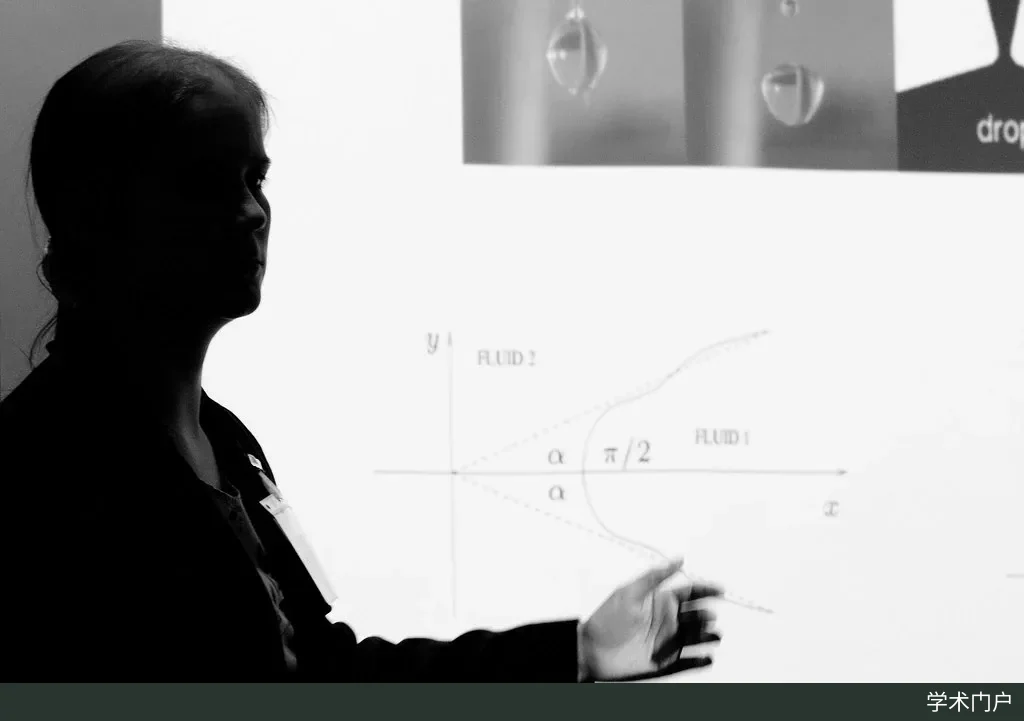
MathOverflow help compares the site to “a large seminar”; the photo shows an applied-mathematics seminar talk. Photo: edbrambley; source: Flickr; license: CC BY-SA 2.0.
Community rules, etiquette, and AI policy
Help lists question types that do not belong on MathOverflow: homework help (too elementary questions are closed as off-topic); open-ended discussion (Stack Exchange software is designed to compress discussion—take that to blogs or forums); encyclopedic “please explain this topic” requests; asking others to check your or someone else’s work, or announcing results here; and bluntly asking how to solve a famous open problem (provide background and ask about a specific related step). Also, do not cross-post the same question to MathOverflow and Mathematics Stack Exchange at once; site-about questions go to meta.mathoverflow.net. Official note: a closed question does not mean you are unwelcome—many active users have had questions closed.
On etiquette, users must follow the Stack Exchange Code of Conduct. Help puts it more directly: community norms extend professional norms of the mathematical community; imagine the site as “a large seminar.” Three requirements: be kind—treat others as you would want to be treated; be honest—downvote incorrect information and say in a comment what is wrong, or better, edit or post a better answer; be professional—when unsure whether something is appropriate, ask “Would I do this in a seminar?”
Generative AI has its own rule. The current Help Center page states that if the mathematical content of a post is judged AI-generated, it will likely be deleted and any reputation from it reversed; repeated posting may bring a moderator warning or account suspension. The reason: askers expect answers written and checked by humans, and AI cannot yet reliably answer the site’s questions that are nontrivial even for high-level experts. AI is allowed only for polishing grammar, translation, and similar surface or language tasks; core mathematics must come from a person, and disclosing AI use in the post is strongly encouraged.
Value and limits
For researchers, MathOverflow is most useful when you need a citable source for a “everyone knows” result, want to check whether a condition can be relaxed, or need a technical sticking point answered by peers in a nearby area. Help’s phrasing: for an expert, understanding your confusion and pointing the way should take little effort. Answers are ranked by votes, and answerers are expected to cite reliable sources when beyond their expertise. Remember that vote counts and “accepted” marks are community signals, not peer review; check the primary literature before citing.
Limits start with narrow scope: elementary questions, open discussion, and vague survey requests are easily closed—this is not a general learning forum. Second, rules are in flux. On 9 September 2026, user Mark Wildon opened a meta poll proposing to allow AI-assisted Q&A if the poster carefully checked the math, rewrote in their own words, declared AI use, and disclosed financial ties to AI companies; as of this article’s check (18 October 2026), the Help Center still stated the previous section’s policy, and the poll had no announced outcome. On the 14th of that month, moderator Stefan Kohl sought views on tightening “blog-style / discussion” questions, as such posts had grown with AI topics; a 2 October preliminary note said community opinion was split, without a clear enough majority for an immediate policy change.
Activity levels also matter. On 5 October, moderator Sam Hopkins cited a Quanta Magazine claim of a “massive decline” in MathOverflow activity and asked whether data supported it. The sole answer so far posted charts showing MathOverflow activity declining, but far less than Stack Overflow and other Stack Exchange sites, with question counts falling more than answer counts; comments noted the charts lacked a methods description. So “decline” for now is only a preliminary community observation, not settled statistics.
References
-
MathOverflow. What topics can I ask about here? Help Center; accessed 2026-10-18.
-
MathOverflow. How do I ask a good question? Help Center; accessed 2026-10-18.
-
MathOverflow. What types of questions should I avoid asking? Help Center; accessed 2026-10-18.
-
MathOverflow. Tour; accessed 2026-10-18.
-
MathOverflow. Privileges; accessed 2026-10-18.
-
MathOverflow. What is this site’s policy on content generated by generative artificial intelligence tools? Help Center; accessed 2026-10-18.
-
Mark Wildon. Poll on proposed update to our policy on AI-assisted answers. MathOverflow Meta, 2026-09-09.
-
Stefan Kohl. Moderation of blog-style / discussion questions. MathOverflow Meta, 2026-09-14 (preliminary conclusion added 2026-10-02).
-
Sam Hopkins. Is MathOverflow "seeing a massive decline in activity"? MathOverflow Meta, 2026-10-05.
-
Information compiled and published by the Scholay academic one-stop platform; report infringement for takedown.
-
Also published on Enter Scholar, a scholars’ community for the intelligent age